Eco-Friendly Bathroom Makeover Ideas for UK Homes
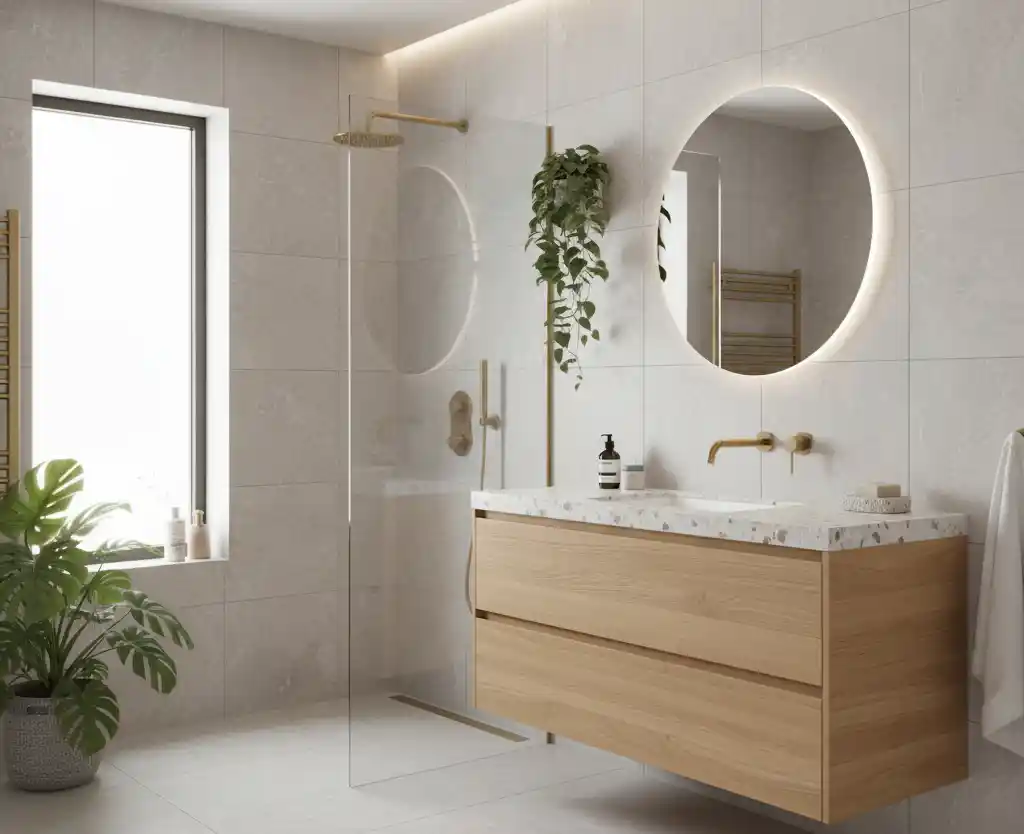
Want a bathroom that looks stunning, lasts for years, and is kind to the planet? A sustainable bathroom tile makeover brings style and conscience together. By choosing eco-friendly, low-maintenance tiles and durable, certified furniture, you can cut waste and bills while elevating your space. Here’s the UK homeowner’s complete guide crafted to help you achieve a bathroom you’ll love to live in.
Why a Sustainable Bathroom Makeover Matters
The UK bathroom market is shifting towards greener, longer-lasting design. According to the Energy Saving Trust, homes can cut water and energy use by up to 60% with simple efficiency upgrades. Meanwhile, research from Houzz UK shows that 40% of homeowners see tiles as the defining design element of any bathroom transformation. Eco-friendly materials aren’t just better for the planet they’re smarter financially. While sustainable products may cost 10–20% more upfront, they deliver long-term savings through reduced maintenance and lower energy bills.
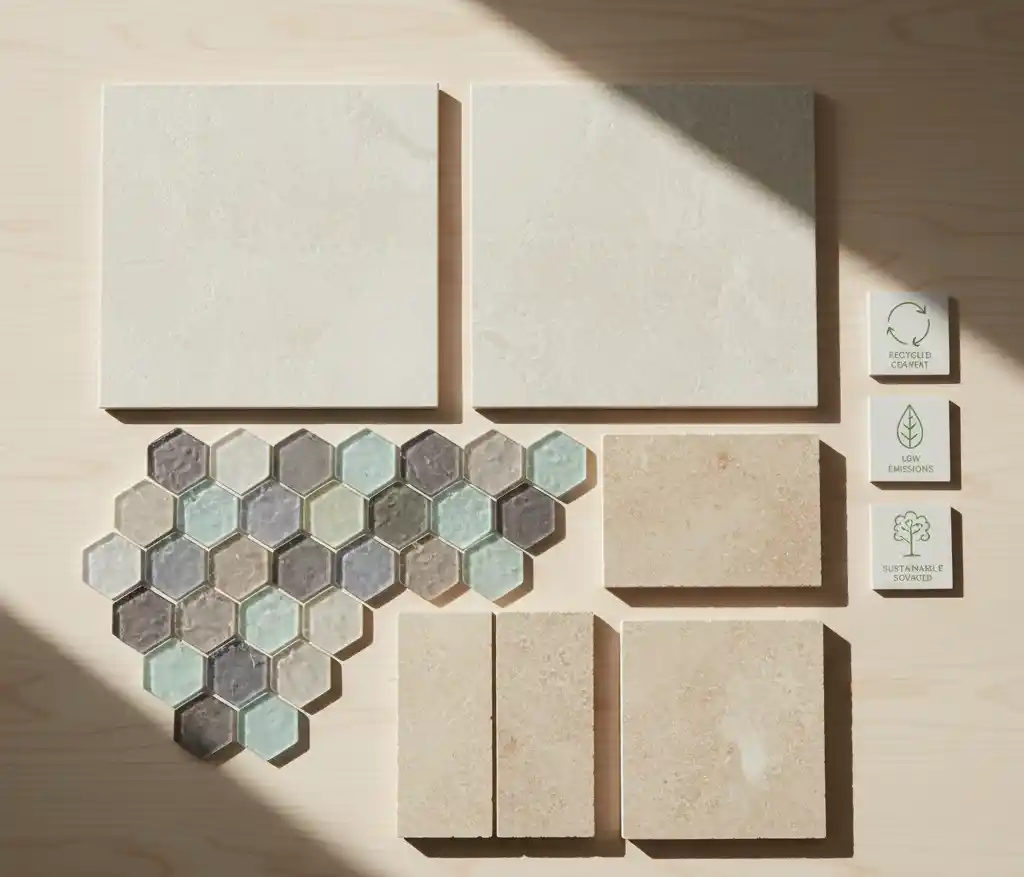
Choosing Sustainable Tiles
a) Select Low-Carbon or Recycled-Content Tiles
Look for porcelain or ceramic tiles with Environmental Product Declarations (EPDs) or ≥60% recycled content. UK suppliers are increasingly manufacturing eco-conscious tiles that use reclaimed materials and cleaner production methods.
b) Durability, Maintenance, and Safety
Porcelain is one of the most low-maintenance surfaces available resistant to stains, moisture, and scratching. These properties make it ideal for busy UK households seeking longevity with minimal upkeep.
Safety Tip: Choose tiles rated R10 or R11 for wet areas. These anti-slip grades meet UK safety standards and add everyday practicality to elegant designs.
c) Coordinate Tiles with Vanity Finishes
- Warm wood tones complement stone-look or beige porcelain.
- Gloss white furniture pairs perfectly with soft-grey or marble-effect finishes.
- Natural textures benefit from large-format tiles (e.g., 600×600 mm) that reduce grout lines and create a seamless, modern effect.d
For more inspiration on pairing tile designs with vanity furniture, check out our guide: Bathroom Vanity Units UK: Tile Ideas & Style Tips.
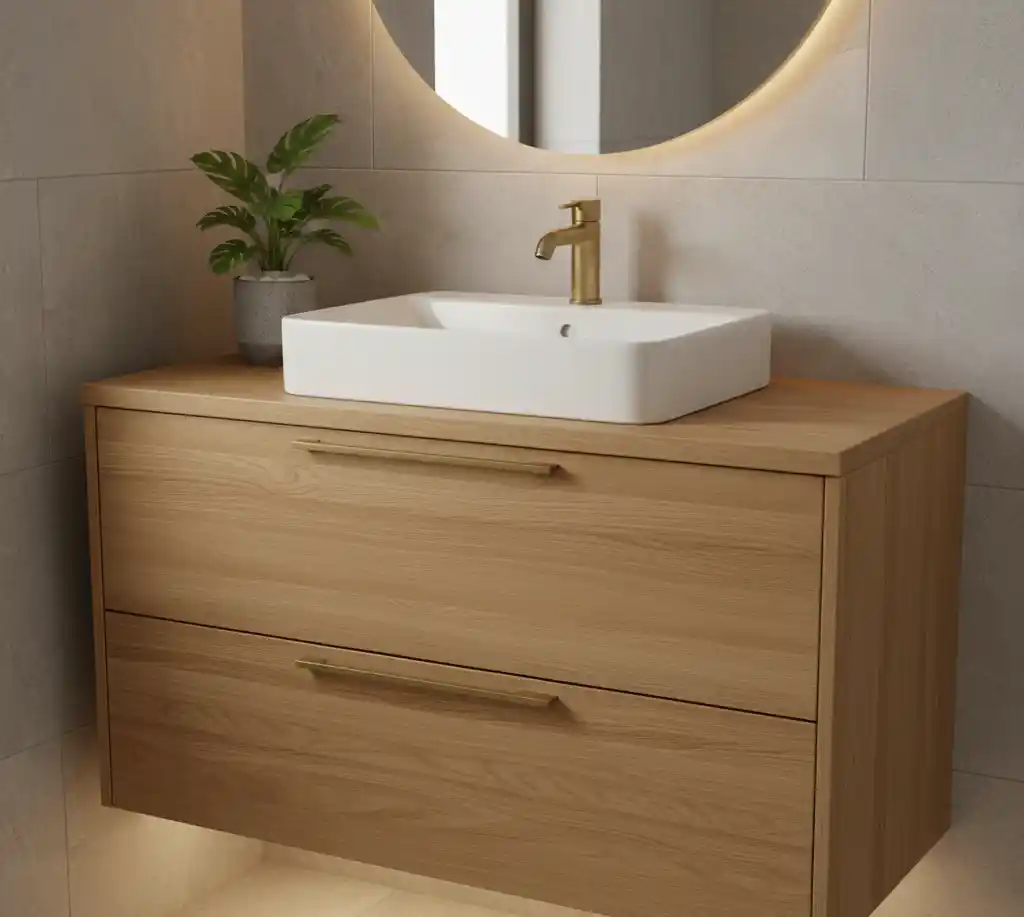
Eco-Friendly Vanity Units & Furniture:
a) Material Integrity
Prioritise FSC-certified timber, bamboo, or E0/CARB P2 low-VOC boards. These ensure low emissions and excellent durability.
Prioritise certified boards (FSC, E0/CARB P2). Uncertified particleboard, while cheaper, can be less durable and compromise your home’s air quality due to formaldehyde emissions.
b) Design, Functionality & Maintenance
Choose vanity units with modular or replaceable components like removable drawers and hardware to extend product life. High-quality craftsmanship means fewer replacements, saving both money and waste.Low-maintenance materials such as sealed oak veneers and matte laminates resist humidity, keeping your bathroom looking newer for longer.
c) Responsible Finishing Touches
Select water-based varnishes and adhesives instead of solvent-based products. They produce fewer VOCs, maintain a fresh indoor environment, and contribute to better air quality overall.
To better understand how different surface finishes impact both aesthetics and maintenance, explore our detailed guide on Gloss vs Matt Vanity Units: Best Finish for UK Bathrooms
Water, Energy & Waste Efficiency in UK Bathrooms
Creating a sustainable bathroom also means reducing everyday resource use:
- Dual-flush toilets and aerated taps can cut water usage by up to 50–60%.
- LED lighting and smart thermostats offer precise energy control.
- Proper ventilation reduces mould growth, extending paint and tile life.
- Disposal Tip: Arrange for specialist construction waste removal; unlike glass, old ceramic and porcelain tiles are rarely accepted by standard household recycling centres.
Pro Tip: Donate reusable fixtures or furniture to local charities rather than sending them to landfill.
Budgeting, Sourcing & Lead Times
Eco-friendly materials are a smart long-term investment, but clarity is key:
- Budget: Expect to pay 10–20% more upfront for certified tiles and furniture.
- Lead Time: Custom sustainable furniture typically requires 6–8 weeks.
- Sourcing Tip: Order tiles and furniture from a single UK supplier, like Royale Stones, to reduce emissions and ensure colour consistency.
- Tile Surplus: Always order 10% extra for future replacements.
By addressing these details early, you’ll avoid surprises and ensure a smoother installation process.
Installation Sequence Checklist
A well-structured installation ensures your eco investment performs perfectly:
- Preparation: Remove old units, level surfaces, and clean the area.
- Waterproofing: Apply a tanking membrane (liquid waterproofing layer) in all wet areas especially showers to prevent leaks and extend surface life.
- Plumbing & Electric Setup: Install low-flow fixtures, LED lighting, and thermostat controls for efficient energy and water use.
- Tiling: Use sustainable adhesive, ensuring correct alignment and even spacing.
- Furniture Installation: Fix vanity units securely, keeping them level and moisture-protected.
- Seal & Finish: Apply low-VOC silicone around joints and corners for a long-lasting, airtight seal.
- Final Inspection: Check for leaks, stability, and smooth operation before sealing the room completely.
This sequence keeps your project efficient and environmentally sound from start to finish.
Trending Sustainable Bathroom Styles in the UK
- Natural Spa Retreat: FSC oak vanity, recycled limestone-look porcelain, and brushed brass fittings.
- Minimalist Urban: White gloss furniture, slate-look porcelain tiles, and matte black taps.
- Earthy Nordic: Bamboo cabinetry, clay-toned porcelain, and soft ambient LED lighting.
Each design combines sustainability with easy maintenance, ensuring your bathroom looks its best with minimal effort.
Summary & Next Steps
A sustainable bathroom makeover isn’t just an aesthetic choice it’s a practical investment. From low-maintenance, eco-certified tiles to durable, VOC-safe furniture, every decision you make helps build a cleaner, healthier home.
Ready to start saving up to 60% on water?
Explore Our Coordinated Eco-Friendly Bathroom Collections
FAQs
Are eco-friendly tiles really low-maintenance?
Yes. High-quality porcelain tiles are dense, water-resistant, and require minimal cleaning ideal for busy UK households.
What’s the best VOC rating for bathroom furniture?
Look for E0 or CARB P2 certification to ensure minimal emissions and healthier indoor air.
How can I reduce water waste?
Install aerated taps, low-flow showers, and dual-flush toilets. The Energy Saving Trust reports potential savings of up to 60% on water use.
Do sustainable materials limit design choice?
Not at all. Modern eco ranges include marble, stone, wood, and matte finishes suitable for both luxury and minimalist looks.
How should I dispose of old tiles responsibly?
Contact your local council or a construction waste collection service. Ceramic tiles cannot go into standard household recycling.